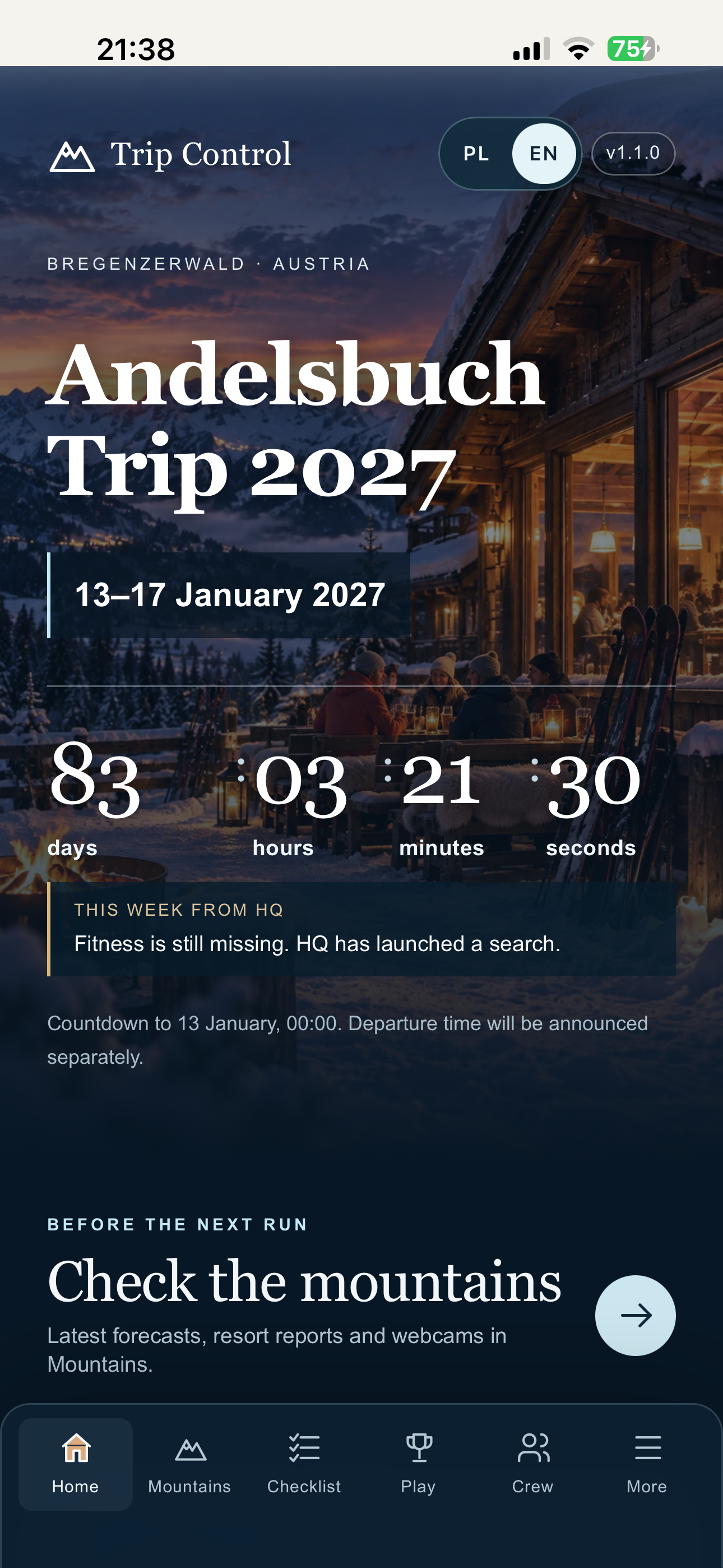
It started with a ski trip.
Six people heading to the Austrian Alps in January. A few days of skiing, good company, hopefully plenty of snow, and probably some decisions that will seem much better after the second beer.
Nothing particularly complicated.
Except I started thinking.
What if we could see the mountain conditions in one place? What if everyone knew what to bring? What if we could organize our plans without searching through hundreds of messages?
And, naturally, what if we could introduce some completely unnecessary but highly entertaining competition?
That's how Trip Control started.
A small idea that became a rather serious little project.
It started with questions, not software
I didn't want to build another weather app.
There are already plenty of those.
I didn't want to build another group chat either. We have Telegram for that, and humanity has probably suffered enough notifications.
I wanted answers to a few practical questions.
Which mountain looks most promising? Has the forecast changed? Are we ready for departure? Who is responsible for bringing what?
And, equally important, who is currently leading our entirely unofficial competition for questionable glory?
Different questions. Different types of information.
But one shared problem: everything should be easy to find, understand and act on.
That sounded suspiciously familiar.
It's the same problem I encounter in business analytics.
From a trip plan to Trip Control
The idea gradually became a private mobile application.
Trip Control brings several parts of the trip together.
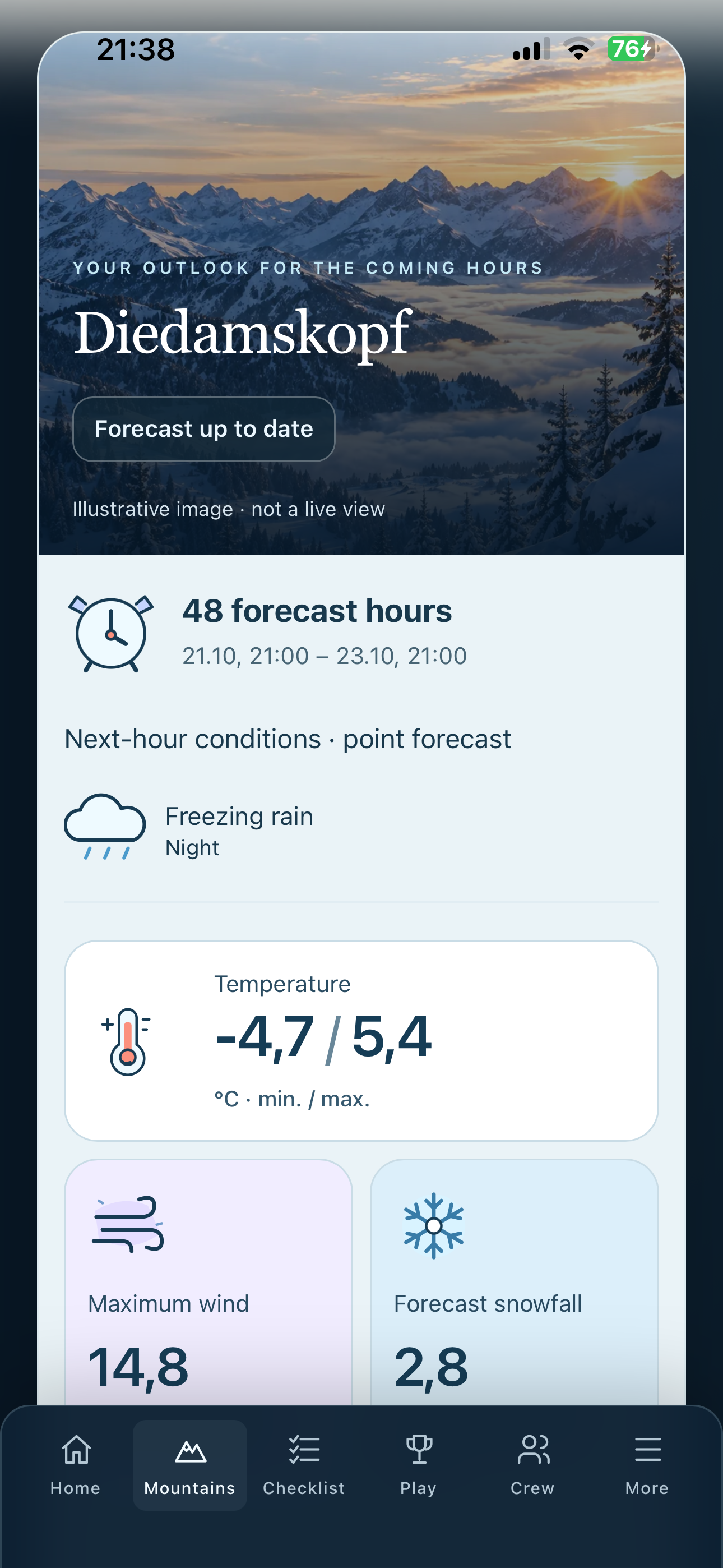
Góry (Mountains) provides mountain weather forecasts and helps us follow changing conditions across the ski areas we're considering.
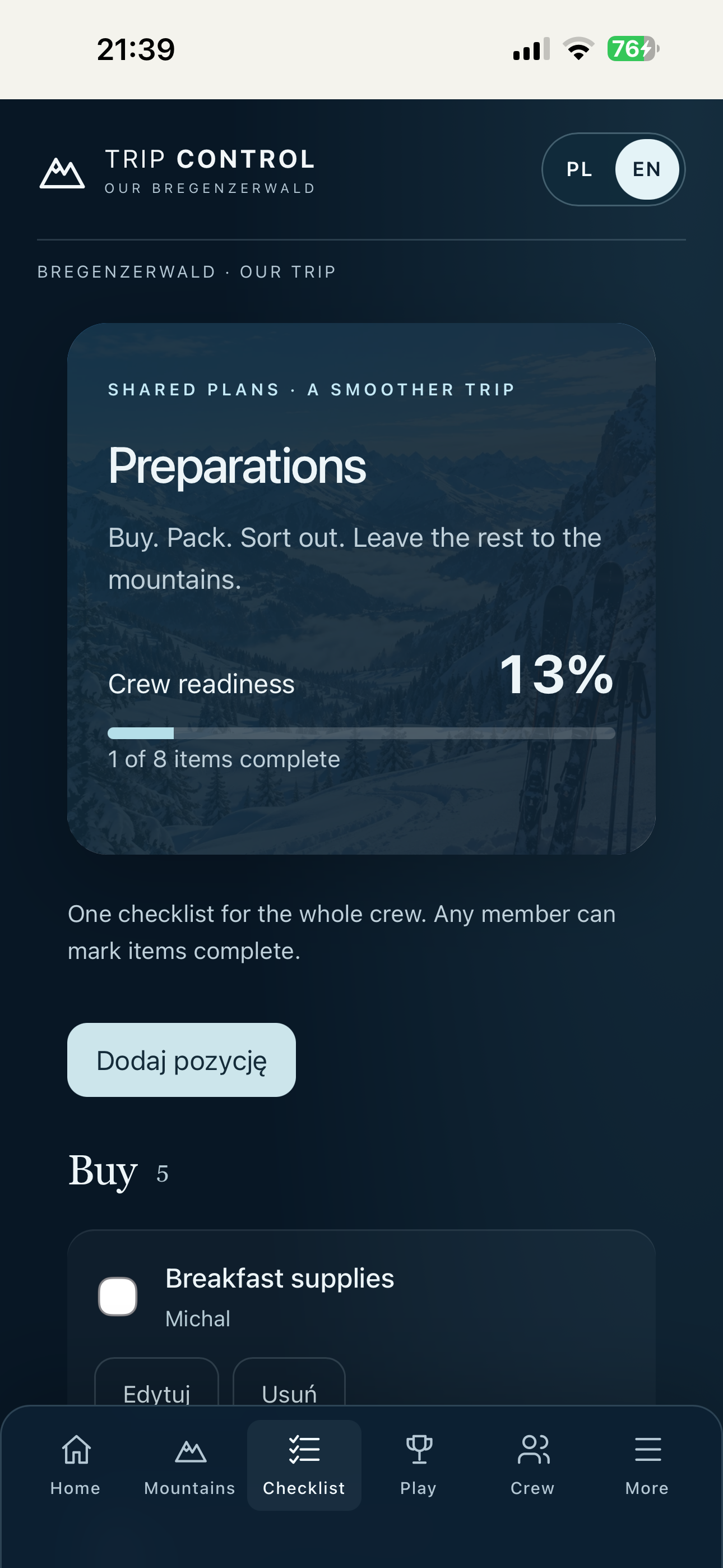
Lista (Preparation) gives everyone a shared checklist. What needs buying, bringing or arranging? Who is assigned? How much is finished?
Ekipa (Crew) connects the people taking part in the trip.
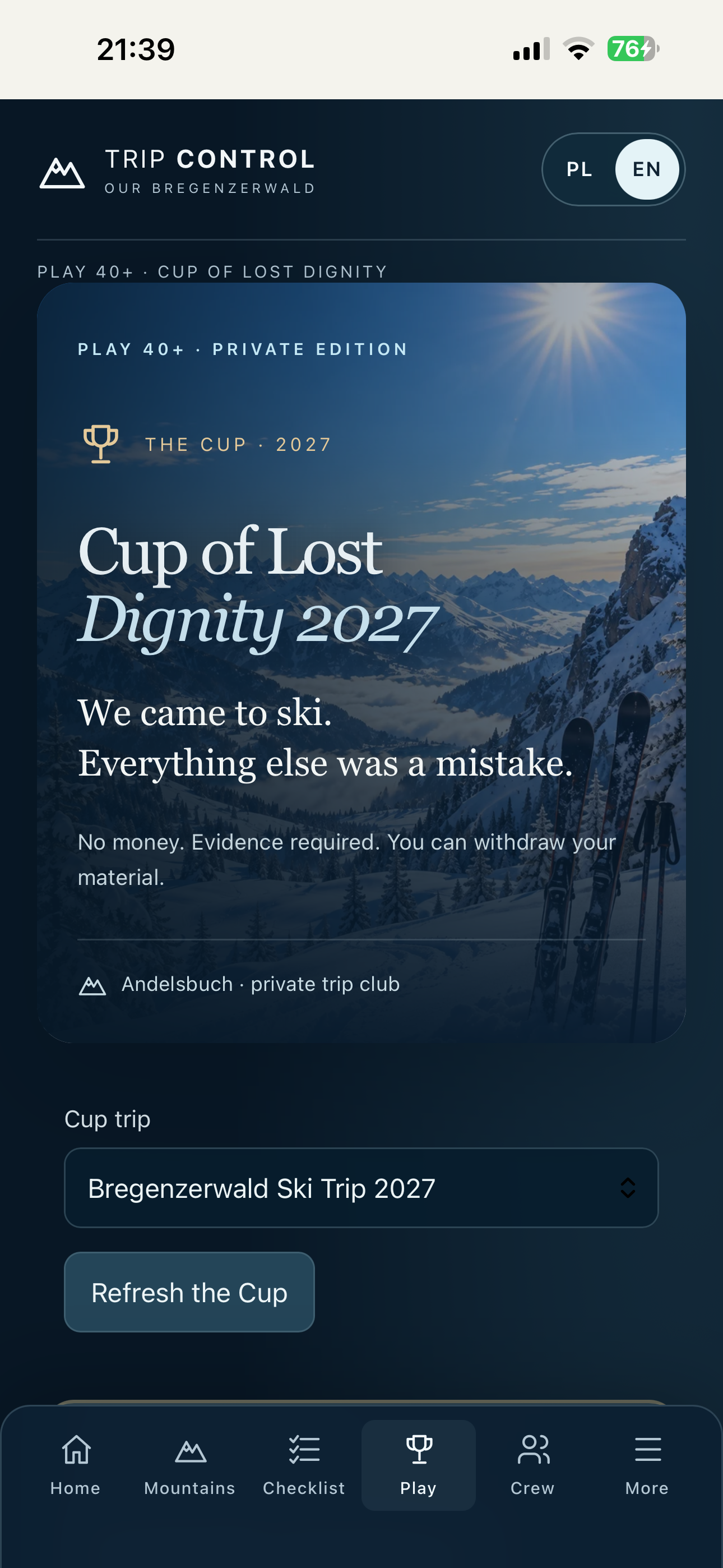
And then there's Graj (Play).
Because apparently a group of grown men going skiing also needs a competitive ranking system.
The games, votes and scores are real application features, not just a collection of funny buttons.
We also brought Telegram into the design for group updates and reminders, rather than creating yet another messaging system.
The result is an installable, mobile-first application designed for the actual people who will use it.
In Polish, naturally. Some of the jokes lose their magic in translation.
The interesting part isn't the dashboard
At first glance, Trip Control looks like a ski-trip application.
But underneath it, several familiar data and management principles appear.
A forecast needs a timestamp. Otherwise, a beautiful weather card might show yesterday's reality.
A shared checklist needs clear responsibilities. Otherwise, six people can all assume someone else is bringing the important thing.
A game needs consistent rules, permissions and reliable scoring. Otherwise, the ranking quickly becomes a discussion about who cheated.
And an automated notification should arrive because something matters, not simply because a computer can send one.
Collect information. Establish what it means. Help people decide. Make the next action easier.
That's the useful part.
The interface is just how people experience it.
Then came the less glamorous lessons
Building software for real people is different from building a nice-looking demonstration.
People have accounts. They need access. Shared information must survive a refresh. Permissions have to work. Changes need testing.
And background automation has an operational cost.
One recent lesson was particularly useful: a system that checks for updates regularly can consume computing resources even when there's nothing new to report.
We're now working on reducing unnecessary background activity while preserving the updates that matter. The actual savings still need to be measured.
Not the most exciting part of a ski trip, admittedly.
But an excellent reminder that good software isn't just about adding features.
It's also about making sensible choices, understanding trade-offs and keeping the whole thing maintainable.
The real test is still ahead
The trip itself is planned for January 2027.
So I'm not going to claim that Trip Control has already transformed our holiday.
The application is a working private pilot. Some features are live and tested. Others, including richer memories and further automation, remain on the roadmap.
The real test will be much simpler.
Will six people actually use it?
Will it make decisions easier?
Will it help us prepare and enjoy the trip without becoming another thing to manage?
And will we still think the games were a good idea after someone loses?
We'll find out.
A ski trip is not a business. But the principle is familiar.
The funny thing about Trip Control is how many ordinary business problems appeared inside a holiday project.
Scattered information. Unclear responsibilities. Changing conditions. Different user permissions. Too many potential notifications. Limited time and resources.
None of these problems requires a ski resort.
You see them in planning, operations, recruitment, reporting and team coordination.
And the solution doesn't always need to be a big enterprise platform.
Sometimes it starts with a few good questions and a small tool built around the people who need answers.
That's what makes projects like this interesting to me.
The goal was never to build more software. It was to make a few decisions easier.
Although, admittedly, the competitive leaderboard was non-negotiable.
What everyday process in your business still depends on scattered messages, spreadsheets and someone remembering what needs to happen next?